
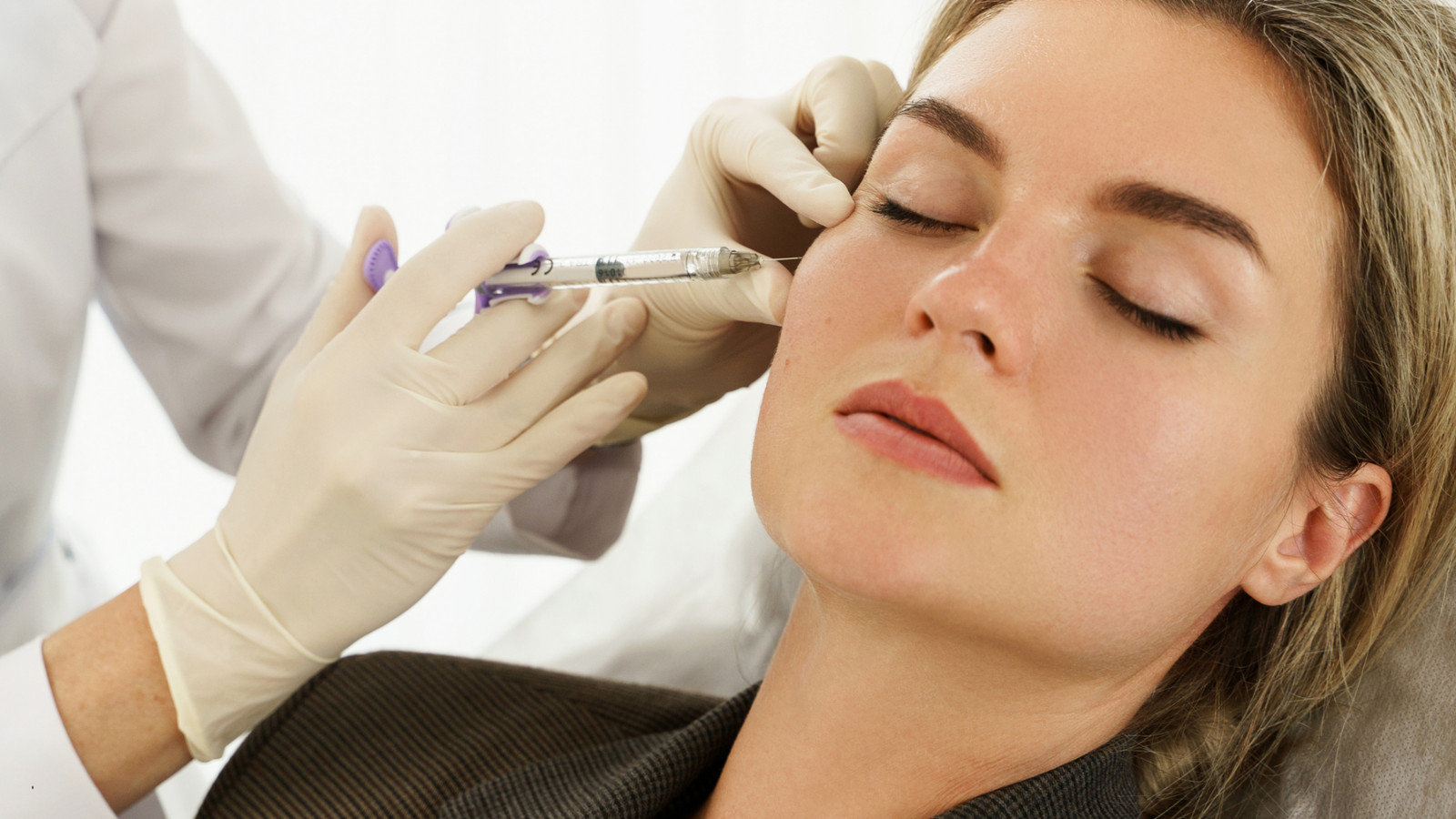
Dark circles under the eyes are not a single problem. In medical literature, the under-eye area can look dark because of pigmentation, visible blood vessels beneath thin skin, puffiness from fat pads or fluid retention, or a genuine hollow at the lid-cheek junction. That distinction matters because tear trough filler only treats some of these causes well.
For the right patient, tear trough filler can soften under-eye hollows and reduce the shadowing that makes eyes look tired. But it is not the best answer for every type of dark circle. If the main issue is brown pigmentation, significant eye bags, lax skin, or chronic swelling, a different treatment plan is usually more appropriate.
What Causes Dark Circles Under the Eyes?
Pigmentation can create true brown discolouration
Some dark circles are caused by increased pigment in the skin itself. Dermatology sources describe common contributors such as genetics, sun exposure, post-inflammatory hyperpigmentation, eczema, rubbing the eyes, and irritation around the eyelids.
When pigmentation is the main issue, tear trough filler is unlikely to be the best first-line treatment because filler does not remove melanin.
Thin skin and visible blood vessels can make the area look blue or purple
The lower eyelid has very thin skin. As skin becomes thinner with age, underlying blood vessels and soft tissue can show through more clearly, creating a blue, purple, or grey appearance.
This is why some people describe their under-eye area as looking “tired” even when they are sleeping well. It also helps explain why one person’s dark circles may respond to skin-quality treatments while another’s do not.
Under-eye hollows create shadows that mimic dark circles
A tear trough is the groove that runs from the inner corner of the eye down toward the cheek. If this area is naturally deep or becomes more hollow with age and volume loss, light falls into the depression and creates a shadow.
This shadowing is one of the main situations where tear trough filler may help.
Dark Circles, Eye Bags, and Under-Eye Hollows Are Not the Same
Under-eye hollows are mainly a volume and contour issue
Under-eye hollows usually look sunken rather than puffy. They often create a sharp transition between the lower eyelid and upper cheek. This can make the face look drawn or exhausted.
Hyaluronic acid filler is designed to improve this type of contour problem, not to change skin colour directly.
Eye bags are a puffiness problem, not a hollowing problem
Eye bags usually happen when supportive tissues weaken and fat protrudes forward, sometimes along with loose skin or fluid retention. In this situation, the issue is not a lack of volume but an excess or displacement of tissue.
This is an important reason why tear trough filler is not suitable for everyone with under-eye darkness. Adding filler to an already puffy area can make the under-eye look heavier rather than fresher.
Many patients have a combination of causes
A very common pattern is mixed anatomy: mild hollowing, some pigment, some skin thinning, and a degree of puffiness. In these cases, a single treatment rarely solves everything.
That is where an expert assessment becomes more important than the treatment name itself.
What Tear Trough Filler Actually Treats
Tear trough filler treats structural hollowing and shadowing
Tear trough filler is usually a soft hyaluronic acid filler placed carefully in the under-eye region to smooth the hollow and reduce the shadow it creates. The aim is not to “fill the eye bag” but to soften the transition between the lower eyelid and cheek.
For patients whose dark circles are mainly caused by under-eye hollows, this can create a more rested appearance.
Tear trough filler does not directly treat pigmentation
If the skin under the eyes is genuinely brown because of hyperpigmentation, filler will not remove that colour. At most, it may reduce some shadowing if hollowing is also present.
This is why the statement “tear trough filler fixes dark circles” is too simplistic and often misleading.
Tear trough filler is not the best choice for prominent bags or poor skin quality alone
Where the main issue is fat prolapse, festoons, malar oedema, significant skin laxity, or crepey skin without much hollowing, filler may give only limited improvement and can sometimes worsen the look of puffiness.
In those cases, treatments that address skin quality or surgery may be more suitable than volume replacement.
Who Is Suitable for Tear Trough Filler?
The best candidates usually have mild to moderate under-eye hollowing
Tear trough filler tends to work best in patients who have a visible hollow, relatively good skin tone, and minimal puffiness. These patients often describe looking tired, sunken, or drawn rather than baggy.
The improvement is usually subtle and natural-looking when the anatomy is suitable.
Good candidates also need realistic expectations
Even in a well-selected patient, tear trough filler does not usually create a completely flawless under-eye. It can soften hollows and reduce shadowing, but it does not necessarily correct every aspect of dark circles.
Patients who understand that improvement is the goal, rather than perfection, are usually better suited to the treatment.
Proper assessment matters more than trend-led demand
The under-eye area is technically delicate and anatomically unforgiving. Published reviews repeatedly stress that patient selection is central to good outcomes.
In practice, that means the best solution may be filler for one patient, and a completely different plan for another.
Who Is Not a Good Candidate for Tear Trough Filler?
Patients with significant eye bags often need another approach
If the lower lids already protrude because of fat pads, filler may make the area appear fuller. In more advanced cases, surgical assessment may be more appropriate than non-surgical filler.
This is one of the most important reasons tear trough filler can be the wrong treatment for dark circles.
Patients with chronic swelling, festoons, or malar oedema are higher risk for poor results
Persistent under-eye or upper cheek swelling is a recognised warning sign. The under-eye area can retain water, and hyaluronic acid filler can attract water as well, increasing the chance of ongoing puffiness.
For this reason, patients with swelling-prone anatomy are often considered poor candidates.
Pigment-dominant dark circles may need skin-focused treatment instead
If the problem is mostly pigmentation, surface texture, inflammation, or very thin skin, treatments aimed at skin quality are usually more logical than filler.
That is where options such as skincare, polynucleotides, PRP, or carefully chosen energy-based treatments may be more relevant.
Risks and Complications of Tear Trough Filler
Common side effects include swelling, bruising, and tenderness
Short-term swelling, bruising, redness, tenderness, and temporary unevenness are common after any injectable treatment. The under-eye is especially prone to visible bruising because the skin is thin and the area is highly vascular.
Final results should not usually be judged on the first day.
Tyndall effect and filler migration are specific under-eye concerns
Tyndall effect refers to a bluish discolouration that can happen when filler sits too superficially under thin skin. This is a classic under-eye filler complication.
Filler migration and prolonged puffiness are also well-recognised concerns, especially if too much product is used or the patient is not a good candidate anatomically.
Rare vascular complications can be severe
Although rare, filler injections carry a risk of vascular occlusion. Published safety guidance and FDA warnings note that accidental injection into a blood vessel can lead to skin injury, vision changes, blindness, or stroke.
That is why under-eye filler should always be treated as a high-skill procedure requiring cautious technique, appropriate patient selection, and clear consent.
Alternatives to Tear Trough Filler for Dark Circles
Polynucleotides may be more useful for skin quality than volume loss
Polynucleotides are increasingly used in aesthetic medicine to support tissue repair, hydration, collagen stimulation, and overall skin quality. They are not a direct replacement for volume in the same way a hyaluronic acid filler is.
For a patient whose main concern is crepey skin, thin under-eye tissue, or overall skin quality rather than a true hollow, polynucleotides may be a better fit than filler.
PRP may appeal to patients who prefer a non-filler approach
Platelet-rich plasma uses the patient’s own blood-derived growth factors and is commonly discussed for skin rejuvenation. Published reviews suggest PRP may help some aspects of the under-eye area, particularly skin quality and fine lines, although outcomes vary and protocols are not fully standardised.
PRP treatment is not a like-for-like substitute for filler, but it may be a reasonable option where regeneration and skin quality are the priority.
Skincare, skin boosters, laser, and surgery all have a place
If pigmentation is a major factor, treatment may focus on sun protection, avoiding rubbing, managing eczema or irritation, and using evidence-based topical skincare where appropriate. If the issue is skin quality, some patients may benefit from skin boosters or collagen-supporting treatments. If the main concern is prominent eye bags or loose lower lids, surgery may offer the most meaningful correction.
This is why dark circles should be diagnosed by cause, not by appearance alone.
What Results, Longevity, and Aftercare Should You Expect?
Results should look softer and fresher, not obviously “done”
Well-performed tear trough filler should aim to reduce hollowing and soften the tired look without creating an overfilled under-eye. The best outcomes are usually subtle.
If a patient expects complete removal of every dark tone under the eye, the treatment may not meet expectations.
Longevity varies, and under-eye filler can last longer than expected
Patient education sources often describe under-eye filler as lasting around one to two years, but published discussions also note that filler in this area may persist longer than many people assume.
This is one reason conservative treatment and cautious top-ups are generally preferred.
Aftercare is straightforward, but warning signs matter
Patients are commonly advised to avoid strenuous exercise for the first 24 to 48 hours, avoid pressure on the area, and expect some swelling or bruising. What matters more is knowing what is not normal.
Severe pain, blanching, unusual skin colour change, or any visual disturbance should always be treated as urgent.
Leave a Comment
Your email address will not be published. Required fields are marked *